
Breed Standard
What is a long haired German Shepherd?
Long-haired German Shepherds are the same as German Shepherd dogs (GSDs), but with longer hair. Long-haired German Shepherds are technically called a long coat German Shepherd, while a short-haired German Shepherd is called a normal coat or stock coat German Shepherd. In the breeding and show dog world, they are described even more specifically as “stock hair” or “long stock hair”.
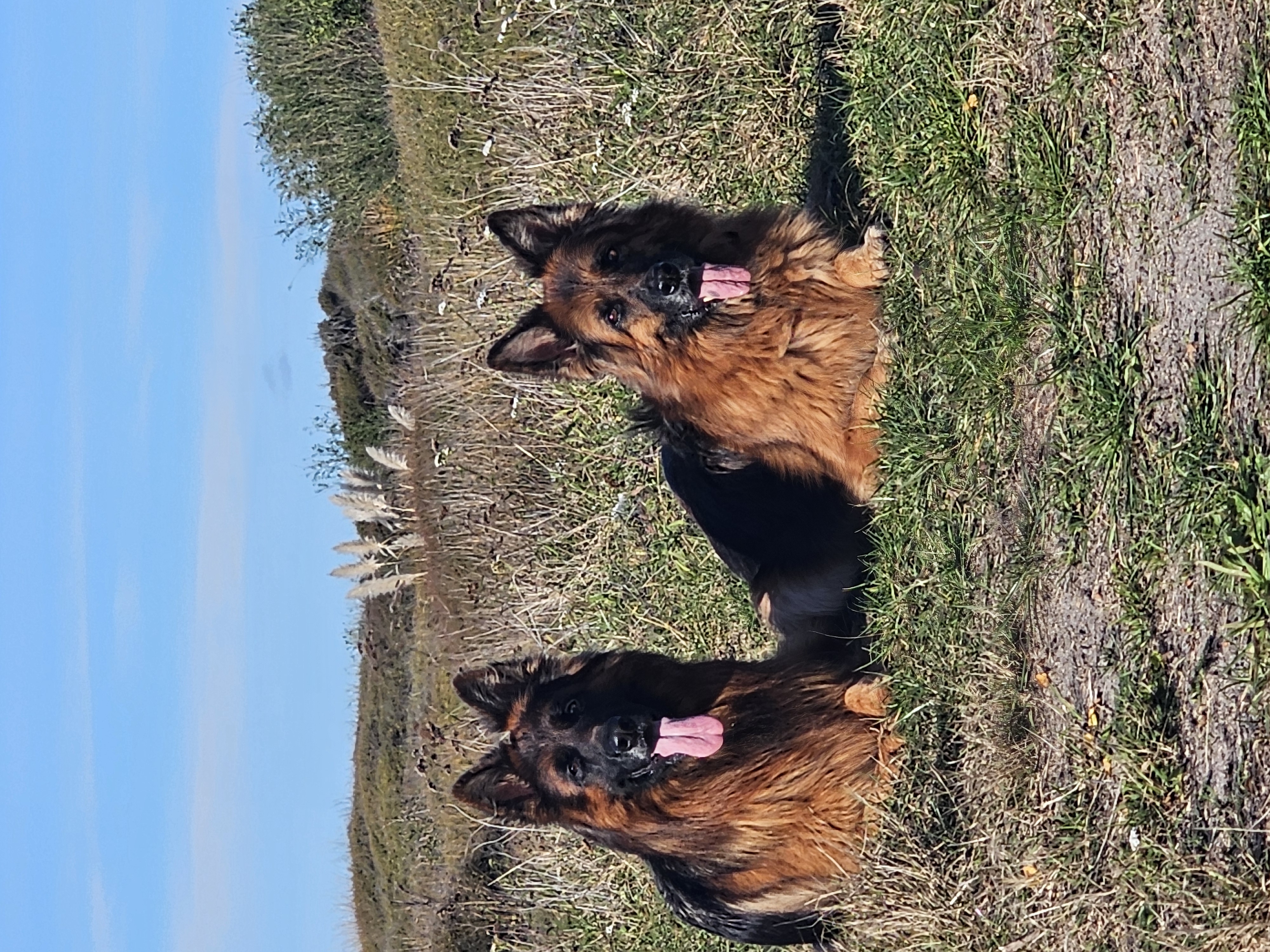
Dogs with either coat have the same physiological structure and both have double coats: an undercoat and a top coat. The only difference between the two types is the top coat. The long haired German Shepherd will have a heavier top coat than the undercoat. The double coat of a German Shepherd is an important feature of the breed. The double coat weathers and insulates the dogs–it protects them from the cold in the winter and the heat in the summer. The length of the coat of a German Shepherd has no impact on its ability as a working dog.
What does a long haired German Shepherd look like?
The skeleton and structure of a long-haired German Shepherd will be the same as a short-haired German Shepherd. Both dogs will have an undercoat, but the difference is that the top coat of a long-haired German Shepherd will be longer. The long coat GSD has longer and silkier hair on the chest, back, face, tail, and on the backside of its legs.
According to the standards of the FCI, the standard for the long coat is described as:
“The guard hair should be long, soft and not close fitting, with tufts on the ears and legs, bushy trousers and bushy tail with downward formation of tuft. Short on the head, including the inside of the ears, on the front side of the legs, on the paws and toes, somewhat longer and more strongly covered in hair on the neck, almost forming a mane.
On the back side of the legs the hair extends to the carpal joint or the hock and forms clear trousers on the back side of the haunches.”
Where do long haired German Shepherds come from?
Historically, German Shepherds originated in Germany and were native sheepdogs. In 1899, a dog club called the Verein für Deutsche Schäferhunde (SV) e.V. was founded by Captain Max von Stephanitz. He firmly believed that the standard of the German Shepherd breed should not include dogs with long hair. Throughout the 1900s, long haired German Shepherds were considered unsuitable and unacceptable for breeding. It wasn’t until this past decade, when the SV and FCI approved the change in conformation standards, that long coat German Shepherds became officially accepted into club breeding standards.
It is important to note that long-haired German Shepherds are the result of natural genetic diversity and not a separate breed. Their long coats are an inherited trait that can occur when both parents carry the recessive long-hair gene. This gene manifests as a more luxurious and abundant coat, offering a striking contrast to the traditional short-haired German Shepherd appearance.
The breeding of long-haired German Shepherds follows the same rigorous standards and principles as their short-haired counterparts. The focus remains on maintaining the breed's exceptional temperament, working abilities, and overall health. Over time, breeders recognized the value of long-haired German Shepherds and began selectively breeding them to maintain and enhance their unique characteristics. Through careful pairings and strategic breeding programs, the long-haired variety established itself as a distinct and cherished branch of the German Shepherd breed.

How big do long-haired German Shepherds get?
Long-haired German Shepherds are structurally the same as short-haired German Shepherds, therefore they can both grow to similar sizes.
Males: 60-65 cm tall, 30-40 kg
Females: 55-60 cm tall, 22-32 kg
Since both German Shepherds are physiologically the same, they also have the same temperaments: loyal, intelligent, energetic, courageous and protective. German Shepherds make for wonderful family companions and working dogs.

Do long-haired German Shepherds shed more than short-haired German Shepherds?
No, this is a common misconception. Long-haired German Shepherds have a thicker topcoat than an undercoat, so there is less shedding because there’s less undercoat. Although they shed less than short haired German Shepherds, their coats still require regular maintenance.
They will need regular brushing and grooming, especially if you enjoy hiking or outdoor activities with your GSD. You may notice the occasional leaves, twigs, or burrs getting caught in a long haired German Shepherd’s fur, but regular brushing is an easy fix for this.
It is also a common misconception that long-haired German Shepherds don’t have an undercoat like their short-haired relatives. While it is a rare occurrence for a long-haired GSD to not have an undercoat, most of them do have undercoats. And just like short-haired GSDs, their undercoats will shed more or less throughout the year depending on the season.

How should I maintain my long-haired German Shepherd’s coat?
Regular brushing
Long-haired German Shepherds require regular brushing to prevent matting and tangles. Aim for at least a few brushing sessions per week to keep their coat in good condition.
Bathing and drying
It's important to bathe your long-haired German Shepherd as needed, using a dog-specific shampoo. Be sure to thoroughly rinse out all the shampoo to prevent any residue. After bathing, use a high-velocity dryer or a cool air dryer to dry their coat thoroughly, as moisture trapped in the fur can lead to skin issues.
Professional grooming
Consider taking your long-haired German Shepherd to a professional groomer for occasional trimming and coat maintenance. A groomer can help keep the fur around sensitive areas, such as the paws and ears, tidy and reduce the chances of matting.
Prepare for seasonal shedding
Like all German Shepherds, long-haired ones will undergo shedding seasons (also called “blowing coat”). Be prepared for increased shedding during these times and brush your dog more frequently to remove loose hair. A de-shedding tool can be helpful in managing shedding and keeping their coat healthy.
Remember, each dog is unique, and the specific care requirements may vary. Pay attention to your long-haired German Shepherd's coat and consult with a your dog’s breeder or a professional groomer for advice and recommendations.
Is the short or long coat right for you?
Both long and short-coated German Shepherds shed year-round and require constant grooming. Despite popular belief, long-haired dogs don’t shed more than short hair but since their hair is longer and finer, it may seem that way when it floats all over the house.
Long coats typically need more grooming to keep their fur silky, shiny, and in good condition. They also tend to pick up more dirt, stickers, grass, and twigs than dogs with denser, shorter coats, so that can make them more work.
